

Table of Content:
- What Makes Interlock Cotton Different?
- Interlock vs Regular Cotton Jersey: A Closer Comparison
- The Role of 40-Count Cotton in Fabric Quality
- Why Fabric Texture Matters in Premium T-Shirts
- Inside Yifuku’s 240 GSM 40FC Interlock T-Shirt
- Does Interlock Cotton Work Well for Custom Printing?
- A Different Approach to Premium Cotton Apparel
When choosing a premium cotton T-shirt, fabric weight is often one of the first details clothing brands consider. While GSM helps describe how substantial a fabric is, it does not tell the whole story of how a garment feels, looks or wears.
Two T-shirts with similar fabric weights can have noticeably different textures and appearances. Much of this difference comes down to how the fabric is knitted, the yarn used and the finishing process.
This is where interlock cotton becomes an interesting option. Known for its smooth, uniform surfaces and double-knit construction, interlock offers a different fabric character from the single-jersey cotton commonly used in everyday T-shirts.
For clothing brands exploring an interlock cotton T-shirt supplier in Malaysia, understanding these differences can help them choose a garment that supports a more refined product direction.
What Makes Interlock Cotton Different?
Interlock fabric gets its name from its knitting construction. Unlike single jersey, which is formed using a single-knit structure, interlock uses a double-knit construction that creates two closely connected fabric surfaces.
This typically produces a denser, more uniform fabric with a smooth appearance on both sides. Its construction also tends to provide greater dimensional stability than comparable single-jersey fabrics.
One important distinction is that interlock describes how the fabric is knitted, not what fibre it contains. Interlock fabrics can be made using different materials, including cotton and synthetic fibre blends.
Yifuku’s 240 GSM interlock T-shirt specifically uses 100% cotton, making it suitable for brands looking for a cotton garment with a more refined knit construction.
The resulting fabric may feel different from a conventional cotton tee, even when the two garments have similar GSM ratings. However, the exact softness, stretch and drape still depend on the yarn, finishing and overall construction.
Interlock vs Regular Cotton Jersey: A Closer Comparison
Although both fabrics can be made from 100% cotton, interlock and single-jersey fabrics differ in how they are constructed.
These structural differences influence the fabric’s surface appearance, body and overall wearing characteristics.
| Feature | Interlock Cotton | Conventional Single-Jersey Cotton |
|---|---|---|
| Knit Construction | Double-knit structure | Single-knit structure |
| Fabric Surface | Generally smooth on both sides | Front and reverse surfaces have different appearances |
| Fabric Character | Often denser and more stable | Often more flexible and fluid |
| Drape | Can provide a more controlled, structured drape | Often creates a softer, more relaxed drape |
| Common Applications | Premium basics and refined casualwear | Everyday T-shirts, graphic apparel and casual clothing |
| Key Consideration | Evaluate fabric feel and structure | Evaluate knit quality, yarn and finishing |
Interlock’s double-knit construction can be appealing for clothing brands that want a smoother and more consistent-looking fabric surface.
Single jersey, meanwhile, remains a versatile option for everyday clothing and printed T-shirts, particularly when a lighter or more fluid fabric character is preferred.
Neither construction is automatically superior. The most suitable choice depends on the garment’s intended fit, appearance and wearing experience.
The Role of 40-Count Cotton in Fabric Quality
Beyond the knitting construction, the yarn itself also influences how a cotton T-shirt feels.
Yifuku’s interlock T-shirt uses 40-count cotton yarn, sometimes referred to as 40s cotton. In the English cotton count system, a higher count indicates a finer yarn. Therefore, 40-count cotton yarn is finer than 20-count or 30-count yarn.
Finer yarns can be used to create fabrics with a smoother and more refined surface, depending on how they are knitted and finished.
When combined with interlock construction, 40-count yarn can contribute to a fabric that feels substantial without relying solely on thicker individual yarns.
This is particularly relevant for Yifuku’s 240 GSM interlock cotton T-shirt, where the fabric weight, yarn selection and double-knit construction work together to create the finished material.
However, a higher yarn count does not automatically guarantee better quality. Cotton fibre quality, knitting consistency and fabric finishing are equally important.
For clothing brands, the value lies in understanding how these details contribute to the garment as a whole.
Why Fabric Texture Matters in Premium T-Shirts
A premium T-shirt does not always need elaborate graphics or distinctive patterns to stand out. Sometimes, its appeal comes from the fabric itself.
The texture, surface consistency and drape of a garment can influence how customers perceive its quality, particularly in minimalist clothing collections where the fabric is one of the most noticeable features.
Interlock cotton fabric can be appealing in this context because its double-knit construction generally produces a smooth, uniform appearance.
For example, a plain black or white T-shirt made with interlock cotton may offer a different visual character from one made using conventional single jersey, even when both garments share a similar weight.
This can be relevant for clothing labels developing understated wardrobe essentials, premium casualwear or collections where fit and fabric presentation take priority over large graphic designs.
However, fabric texture should complement the garment’s overall design. A smooth surface alone does not make a T-shirt premium; the fit, stitching, finishing and consistency of the finished product also matter.
Inside Yifuku's 240 GSM 40FC Interlock T-Shirt
Yifuku’s 240 GSM 40FC Interlock T-Shirt combines 100% cotton with a 40-count yarn and interlock knit construction, offering a different material option from conventional cotton jersey blanks.
The garment features a loose-fit silhouette, making it suitable for clothing brands that prefer a relaxed appearance without the more exaggerated proportions of an oversized cut.
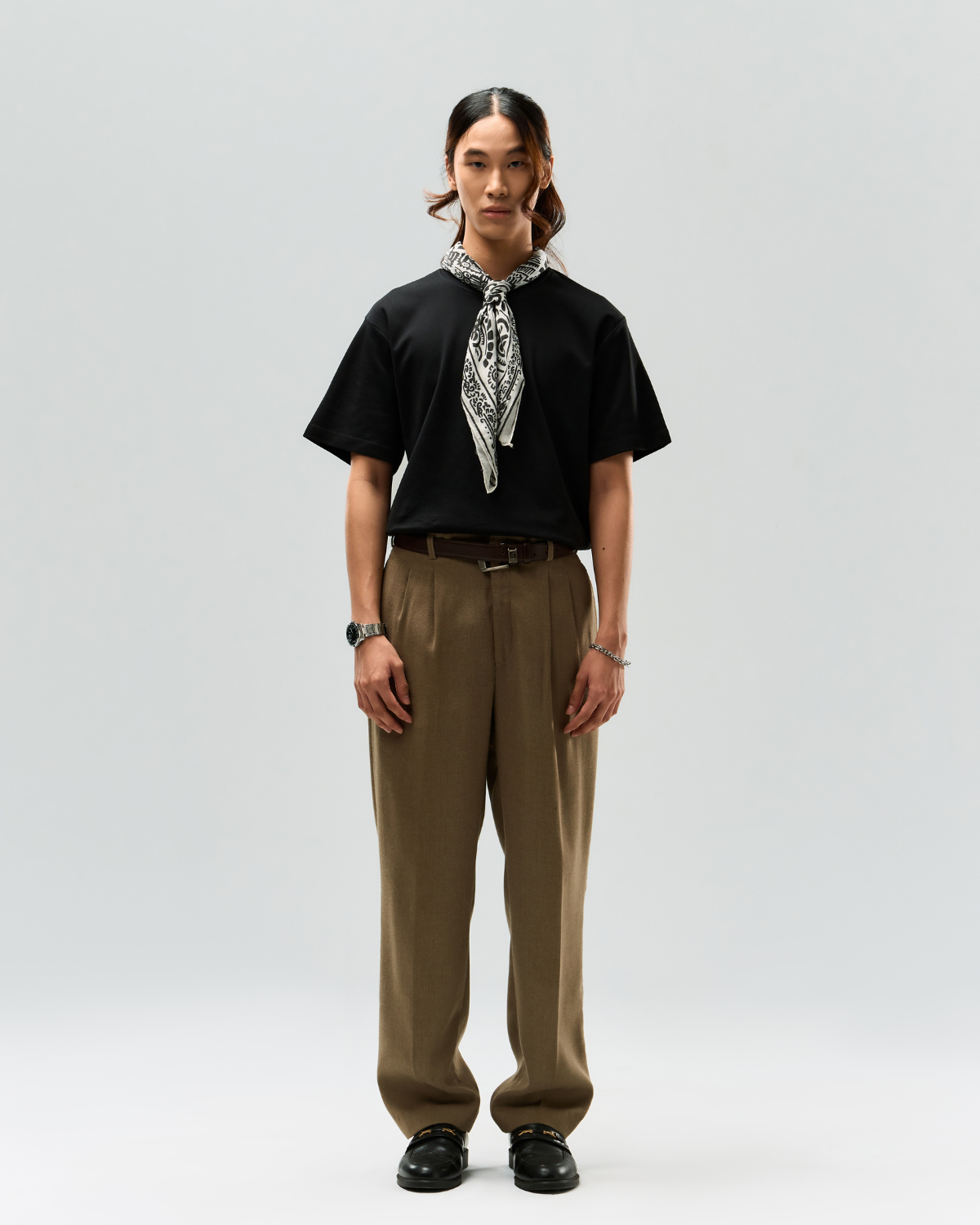
240 GSM 40FC INTERLOCK
RM40.00240 GSM Interlock Cotton T-Shirt Supplier Malaysia — Premium loose-fit T-Shirt made from 100% 40-count interlock cotton with a smooth, refined fabric surface, ideal for clothing brands, custom printing, rebranding, and bulk orders.
- 240 GSM fabric (7.08 oz/yd)
- 100% 40-count premium interlock cotton
- Loose-fit cutting
- 2.5CM knit collar
- Double-needle sleeve and bottom hems
- Removable label for easier rebranding
- Colours: Black / White
- Sizes: XS – 3XL
| Specification | Details |
|---|---|
| Fabric Weight | 240 GSM / 7.08 oz/yd² |
| Fabric Composition | 100% 40-count interlock cotton |
| Knit Construction | Interlock double-knit |
| Fit | Loose fit |
| Collar | 2.5 cm knit collar |
| Construction | Double-needle sleeve and bottom hems |
| Rebranding | Removable label |
| Colours | Black / White |
| Sizes | XS–3XL |
The combination of 40-count yarn and interlock knitting gives the garment its distinctive fabric construction, while the 240 GSM weight provides a substantial foundation for everyday apparel.
Details such as the knit collar and double-needle hems contribute to the overall garment finish. The removable label also makes the blank easier to adapt for brands developing their own apparel lines.
For businesses sourcing premium interlock cotton T-shirts in Malaysia, these specifications offer a useful starting point when evaluating fabric quality, fit and customisation requirements.
Does Interlock Cotton Work Well for Custom Printing?
When developing custom apparel, fabric construction can influence how the finished design looks and feels.
Because interlock cotton typically has a smooth and uniform surface, it can provide an appealing foundation for clean graphics, understated logos and refined branding.
However, a smooth-looking fabric does not automatically guarantee better printing results. The outcome still depends on the printing technique, artwork, ink or transfer materials and production settings.
For clothing brands, a few fabric-specific considerations are worth exploring:
Printed surface appearance: Assess how the design looks against the interlock fabric’s texture and surface finish.
Print flexibility: Consider whether the printed area maintains a suitable feel and movement when worn.
Embroidery compatibility: Evaluate how stitch density, placement and stabilisation affect the fabric’s surface and drape.
Care and washing: Test the finished design according to the garment’s care instructions to assess its appearance after laundering.
Yifuku offers customisation options including DTG, DTF, silkscreen printing and embroidery, allowing brands to explore different approaches depending on their designs and requirements.
For brands interested in custom printing on interlock cotton T-shirts, reviewing a finished sample is a practical way to determine whether the chosen decoration method complements the fabric.
A Different Approach to Premium Cotton Apparel
Choosing a premium cotton T-shirt involves more than selecting a heavyweight fabric or a particular fit. The yarn, knitting method and finishing all contribute to how the garment looks and feels.
Interlock cotton offers clothing brands a different approach to conventional jersey fabrics, with a double-knit structure that can provide a smoother, more uniform appearance.
Combined with 40-count cotton yarn, Yifuku’s 240 GSM interlock T-shirt provides an option for brands interested in refined fabric construction and understated casual apparel.
If you’re looking for an interlock cotton T-shirt supplier in Malaysia, explore Yifuku’s 240 GSM 40FC Interlock T-Shirt to see how its fabric construction, loose-fit silhouette and customisation options could support your next clothing collection.