
Table of Content:
- A Heavyweight Tee That Doesn’t Need to Feel Excessive
- Loose Fit vs Oversized: Why the Difference Matters
- From Blank Cotton Tee to Your Own Design
- One T-Shirt, Different Collection Possibilities
- A Closer Look at Yifuku’s 230 GSM Cotton Tee
- Before Your First Print Run: What Should You Check?
- The Right Choice For Your Next Clothing Collection
Not every clothing brand needs the thickest or heaviest T-shirt to create a quality product. Sometimes, the better choice is a versatile blank that offers a substantial fabric feel without being overly heavy for everyday wear.
A 230 GSM cotton T-shirt provides this middle ground. With more fabric weight than many standard lightweight tees, it can offer a more substantial feel while remaining suitable for a variety of casual clothing applications.
For clothing brands exploring a 230 GSM cotton T-shirt supplier in Malaysia, the appeal lies in its flexibility. Whether you’re developing graphic T-shirts, branded merchandise or everyday basics, a well-constructed cotton blank gives you a foundation to build upon.
The key is understanding how its fabric weight, fit and customisation possibilities align with your intended product.
A Heavyweight Tee That Doesn't Need to Feel Excessive
Fabric weight is often associated with T-shirt quality, but heavier does not always mean better. At 230 GSM, a cotton T-shirt falls within the heavyweight range commonly used for casual apparel. It offers more fabric substance than many lighter tees, without reaching the weight of thicker 280 GSM or 305 GSM alternatives.
This makes 230 GSM worth considering for brands that want their garments to feel substantial while still being practical for regular use. For Malaysia’s warm climate, fabric weight is also worth evaluating alongside fit, airflow and personal comfort. A heavier cotton T-shirt may feel different from a lightweight alternative, so choosing the right option depends on the wearing experience you want to provide.
Rather than selecting a T-shirt based on GSM alone, consider how the fabric feels, drapes and supports your intended design.
Loose Fit vs Oversized: Why the Difference Matters

One detail that clothing brands should pay attention to is the garment’s cutting. Although loose-fit and oversized T-shirts share a relaxed appearance, they are not necessarily the same.
A loose-fit T-shirt generally provides additional room around the body without deliberately exaggerating the garment’s overall proportions. It offers a relaxed silhouette that can work across different casual apparel styles.
An oversized T-shirt, on the other hand, is typically designed with more pronounced proportions, which may include wider bodies, dropped shoulders or longer sleeves.
Yifuku’s 230 GSM cotton T-shirt features a loose-fit cut, making it a suitable option for brands that prefer a relaxed silhouette without necessarily adopting a more exaggerated streetwear fit.
For custom apparel, this distinction matters because the garment’s proportions influence how artwork sits on the body. Before choosing a blank, consider whether your designs are better suited to a classic relaxed fit or a more noticeably oversized silhouette.
From Blank Cotton Tee to Your Own Design
A quality blank T-shirt is only the starting point. The way you approach customisation can make a significant difference in how the finished garment looks.
For clothing brands exploring custom T-shirt printing in Malaysia, it helps to think beyond simply placing a logo or artwork onto the fabric.
Several design considerations can influence the outcome:
Artwork Placement and Proportion
The size and placement of your design should complement the T-shirt’s loose-fit silhouette. A small chest logo creates a different impression from a full-size front or back graphic.
Fabric Colour and Design Contrast
Black and white cotton T-shirts offer versatile foundations for different design styles. Consider how your artwork colours interact with the base garment and whether the contrast supports the intended visual effect.
Choosing a Printing Method
DTG, DTF and silkscreen printing are commonly used for custom apparel, but each method has different requirements and strengths. The appropriate option depends on factors such as artwork complexity, order quantity and the intended finish.
Embroidery and Minimal Branding
For brands that prefer subtle branding, embroidery may offer an alternative to printed graphics. However, placement, stitch density and design size should be assessed to ensure a suitable result.
Ultimately, successful cotton T-shirt printing comes down to choosing a garment and customisation method that work well together.
One T-Shirt, Different Collection Possibilities
One advantage of a versatile cotton blank is that it can support different clothing concepts without requiring a completely different garment for every design.
A 230 GSM cotton T-shirt can provide a foundation for:
Graphic T-shirt collections: Custom illustrations, typography and branded artwork for casual apparel.
Everyday clothing essentials: Simple cotton tees with understated details for brands developing wardrobe basics.
Creator and community merchandise: Branded clothing for content creators, events, communities and independent labels.
Corporate and lifestyle apparel: Casual branded T-shirts for businesses looking beyond traditional uniforms.
Limited collection releases: Smaller product launches that experiment with different designs using a consistent blank.
Using the same garment across multiple designs can also help brands maintain consistency in fabric weight, fit and sizing. For emerging clothing labels, this approach makes it easier to develop a recognisable product range while focusing their creative effort on artwork and branding.
A Closer Look at Yifuku's 230 GSM Cotton Tee
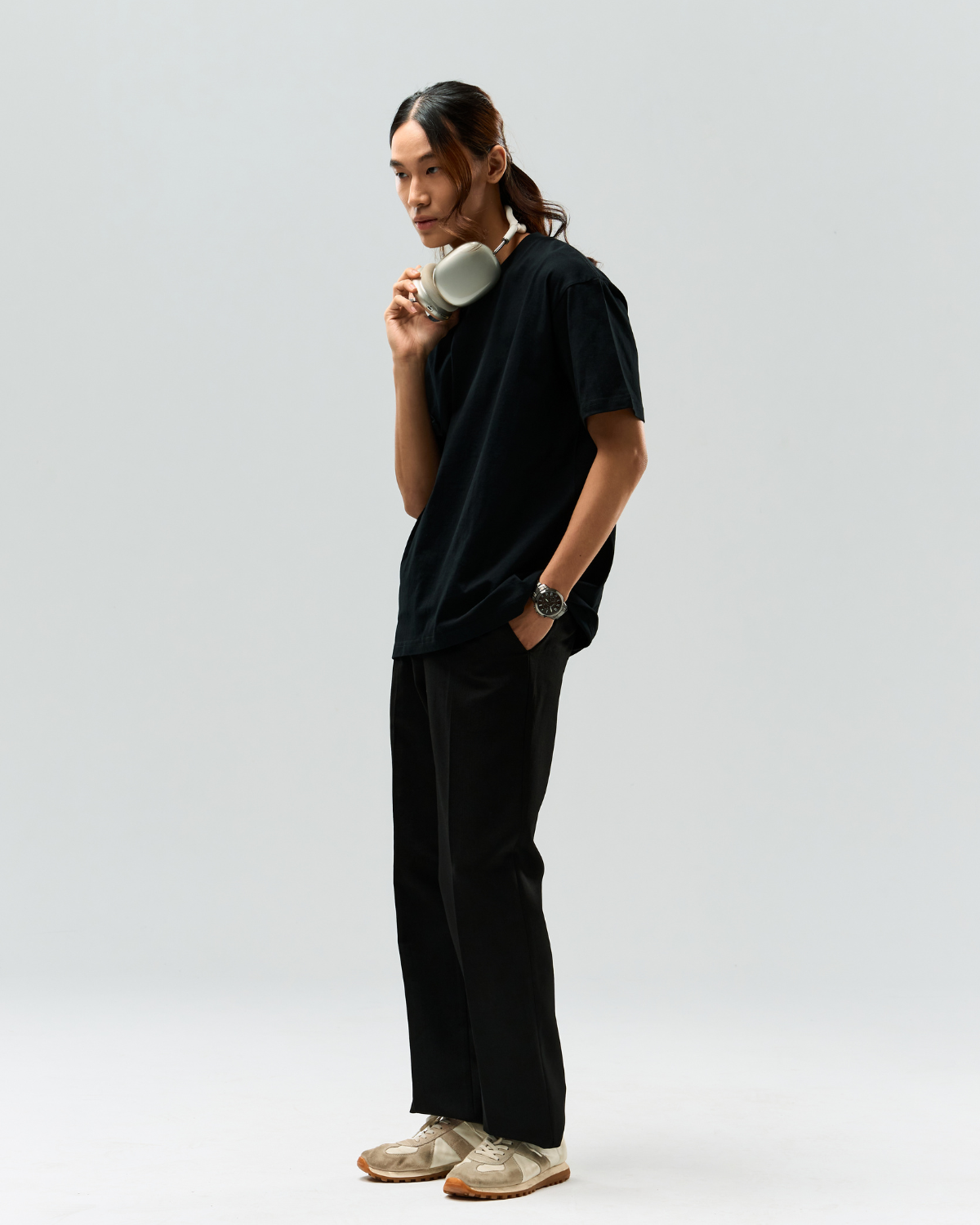
Yifuku’s 230 GSM 100% Cotton T-Shirt is designed as a heavyweight, loose-fit blank suitable for casual clothing and custom apparel applications.
Made from ring-spun cotton with a pre-shrunk finish, the garment includes construction details that are worth considering when developing a branded T-shirt.
230 GSM 100% COTTON
RM30.00230 GSM Cotton T-Shirt Supplier Malaysia — Premium heavyweight T-shirt made from 100% pre-shrunk ring-spun cotton with a comfortable loose fit, ideal for clothing brands, custom printing, and bulk orders.
- 230 GSM heavyweight fabric (6.78 oz/yd)
- 100% ring-spun cotton
- Preshrunk fabric
- Loose-fit cutting
- 2.5CM rib collar
- Double-needle sleeve and bottom hems
- Removable label for easier rebranding
- Colours: Black / White
- Sizes: S – 3XL
| Specification | Details |
|---|---|
| Fabric Weight | 230 GSM / 6.78 oz/yd² |
| Fabric Composition | 100% ring-spun cotton |
| Fabric Finish | Pre-shrunk |
| Fit | Loose fit |
| Collar | 2.5 cm rib collar |
| Construction | Double-needle sleeve and bottom hems |
| Rebranding | Removable label |
| Colours | Black / White |
| Sizes | S–3XL |
The ring-spun cotton construction provides a familiar cotton fabric option, while the pre-shrunk treatment is intended to help manage shrinkage. However, some dimensional change may still occur during washing.
Details such as the rib collar and double-needle hems contribute to the garment’s construction, while the removable label makes it easier to adapt the blank for clothing-brand applications.
For businesses sourcing 230 GSM T-shirts wholesale, these specifications provide a useful starting point when comparing garment options and planning customisation requirements.
Before Your First Print Run: What Should You Check?
Turning a blank cotton T-shirt into a finished branded product involves more than selecting a fabric and uploading artwork. Before committing to production, taking time to review a few practical details can help reduce avoidable mistakes.
1. Confirm the Garment Fit
Review the size chart and, where practical, try on a sample. A loose-fit garment may look and feel different from an oversized or regular-fit alternative.
2. Prepare Your Artwork Properly
Ensure your artwork meets the printing method’s file requirements. Design resolution, dimensions, colours and placement should be confirmed before production.
3. Review the Printing Method
Different artwork styles and order quantities may benefit from different printing techniques. Discuss the intended results with your supplier rather than selecting a method based solely on familiarity.
4. Evaluate a Finished Sample
Where available, inspect a customised sample to assess print placement, visual appearance and how the design works with the fabric.
5. Plan Sizes and Quantities
Prepare a clear breakdown of garment sizes, colours and quantities. This is particularly important for merchandise launches or clothing collections with multiple designs.
Working with an experienced supplier can make these decisions easier to manage. Yifuku supports custom apparel projects through services including DTG, DTF, silkscreen printing and embroidery. Businesses planning larger orders can also explore Yifuku’s bulk purchasing options to discuss their garment and customisation requirements.
The Right Choice For Your Next Clothing Collection
A 230 GSM cotton T-shirt offers clothing brands a practical option for developing heavyweight casual apparel without automatically moving towards thicker fabrics or exaggerated oversized cuts.
Its loose-fit silhouette, 100% cotton composition and customisation possibilities make it worth considering for graphic T-shirts, everyday basics and branded merchandise.
However, the best garment is ultimately the one that supports your intended design, customer preferences and product positioning. If you’re looking for a 230 GSM cotton T-shirt supplier in Malaysia, explore Yifuku’s 100% Cotton T-Shirt collection and discover how the right blank can provide a foundation for your next custom apparel project.