
Table of Content:
- Start With the Brand, Not the T-Shirt
- Know Who You Want to Sell To
- Work Out Your Budget Before You Build the Collection
- Choose How Your First Product Will Be Made
- Sample First, Then Plan Your First Drop
- Price the Product Like a Business
- Choose Where You Will Sell and Launch Simply
- Launch, Learn and Build the Second Drop Better
Starting a clothing brand can feel exciting at first, but the number of decisions involved can quickly become overwhelming. What should you sell? How much should you spend? Where do you find a supplier? And how many pieces should you produce for your first launch?
If you are learning how to start a clothing brand in Malaysia, the goal does not need to be building a large collection immediately. A better starting point is developing one clear idea, turning it into a manageable first product and learning from how real customers respond.
Here is a practical way to approach it.
Start With the Brand, Not the T-Shirt
Before choosing fabric, printing methods or colours, get clear about what your clothing brand is trying to offer.
You do not need a complete brand book or dozens of product ideas. But you should be able to answer a few basic questions:
- Who are you creating the clothes for?
- What style or aesthetic does the brand represent?
- What type of product will you start with?
- What price range are you aiming for?
- Why might someone choose your product over another option?
For example, a brand focused on premium heavyweight streetwear will make very different choices from one selling affordable graphic tees or creator merchandise.
Your brand direction will eventually influence everything from fabric weight and fit to photography, packaging and pricing.
Start simple. One clear idea is more useful than trying to launch with every possible style at once.
Know Who You Want to Sell To
A clothing brand becomes easier to build when you understand who the product is actually for.
Instead of trying to appeal to everyone, look at the group most likely to connect with your style. Consider what they already wear, how much they usually spend and which brands they follow.
A simple starting point is to research:
- Brands your target customers already buy
- Common price ranges
- Popular fits and garment styles
- Colours and designs that appear frequently
- Where those customers discover new brands
- Reviews or comments about what customers like and dislike
You do not need to copy what competitors are doing. The purpose is to understand the market well enough to see where your own brand can fit.
If several brands are already selling oversized graphic tees, for example, your difference might come from the artwork, fabric, fit, brand story or overall product experience.
The clearer your customer is, the easier your product decisions become.
Work Out Your Budget Before You Build the Collection
One of the first questions beginners ask is how much it costs to start a clothing brand.
There is no single number because the budget depends on how many products you launch, the type of garment, customisation method, order quantity and how much of the work you handle yourself.
Instead of starting with a large collection and calculating the cost afterwards, decide how much you are comfortable investing first.
Your starting budget may need to cover:
| Cost Area | What It May Include |
|---|---|
| Garments | T-shirts, hoodies or other blanks |
| Samples | Testing fit, fabric and print quality |
| Customisation | DTG, DTF, silkscreen or embroidery |
| Branding | Labels, packaging or inserts |
| Content | Product photography and videos |
| Storefront | Website, marketplace or e-commerce fees |
| Marketing | Ads, creator collaborations or launch content |
| Fulfilment | Packaging, delivery and shipping materials |
| Buffer | Unexpected production or launch costs |
This also helps prevent one of the easiest beginner mistakes: spending most of the budget on inventory and leaving very little for actually selling it.
Your first launch should be large enough to test the idea, but small enough that you can afford to learn from it.
Choose How Your First Product Will Be Made
Once the brand direction and budget are clearer, you can start thinking about production. For many new clothing brands, there are two broad ways to begin.
Using ready-made garments and customising them is usually the simpler route. You choose an existing T-shirt or hoodie, select the colour and size range, then add your artwork through printing or embroidery.
Developing a garment from scratch gives you more control over details such as fabric, pattern, measurements and construction, but it can also involve more development work, sampling and production complexity.
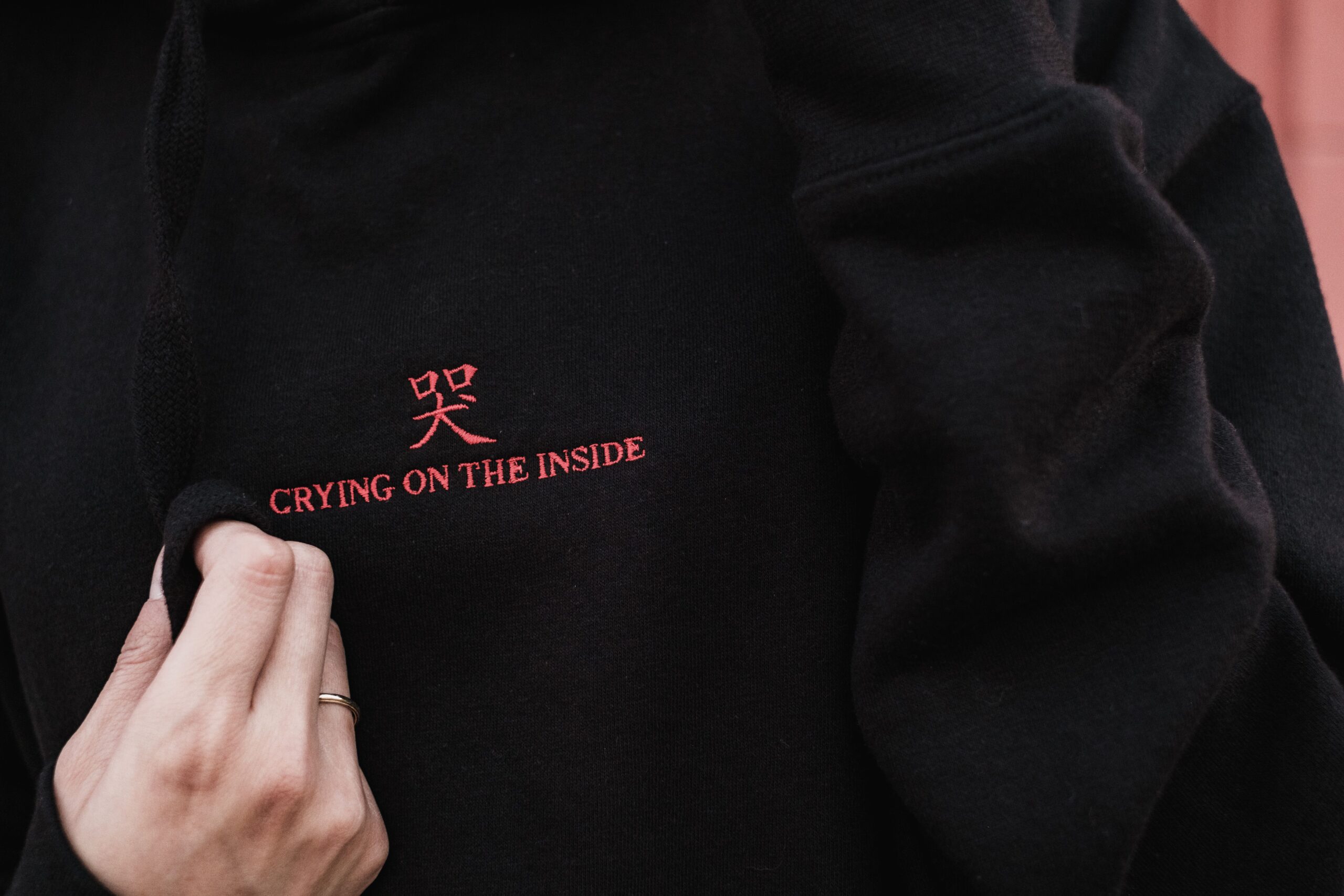
For a first collection, using an existing high-quality blank can make it easier to focus on the parts customers actually see: fit, artwork, branding and overall presentation. When evaluating a clothing supplier in Malaysia, look beyond the garment price. Check the fabric composition, GSM, cutting, size range, colours, customisation options and whether the same product can be ordered again later.
Yifuku, for example, offers different T-shirt weights, fits and fabric types alongside DTG, DTF, silkscreen printing and embroidery, allowing brands to combine garment sourcing and customisation within the same production workflow.
Sample First, Then Plan Your First Drop
Seeing a product online is not the same as holding the finished garment in your hands. Whenever possible, sample your product before committing to a larger order.
Check:
- How the T-shirt fits when worn
- Whether the fabric feels appropriate for the selling price
- Print size and placement
- Colour accuracy
- Collar and stitching quality
- How the garment behaves after washing
- Whether the product still represents your original brand idea
Once the sample feels right, keep the first collection focused. It can be tempting to launch five designs in four colours immediately, but every variation creates more inventory to manage.
A first drop with one to three strong designs and a controlled colour range may be easier to produce, photograph, market and evaluate. Think of your first launch as validation. You are finding out what customers actually want before putting more money into the next collection.
Price the Product Like a Business
Pricing a T-shirt involves more than adding a markup to the cost of the blank.
Your actual product cost may include the garment, printing, labels, packaging and production. But running the brand can also involve payment fees, website costs, marketing, shipping support and inventory that does not sell immediately.
A simple way to think about it is:
Selling Price → Product Costs → Operating Costs → Profit
If the finished T-shirt costs RM30 to produce, selling it for RM35 simply because the product is technically profitable may leave very little room to run the rest of the business. Your pricing should also match the positioning of the product.
A basic merchandise tee and a heavyweight oversized streetwear T-shirt may use very different materials, construction and branding, so customers are unlikely to evaluate them in exactly the same way.
Before deciding on a final price, compare similar Malaysian brands and ask whether your product quality, presentation and brand positioning support the price you intend to charge.
Choose Where You Will Sell and Launch Simply
You do not need to appear on every platform when launching your first clothing brand. Choose one main place where customers can purchase, then focus your marketing efforts on bringing people there.
Depending on your audience, that could be:
- Your own e-commerce website
- Online marketplaces
- Social commerce
- Direct orders through your community
- Pop-up markets and events
Your launch content should make the buying decision easy. Customers should quickly understand what the product looks like, how it fits, what sizes are available, how much it costs and when they can expect delivery.
Prepare clear product photos, sizing information and product descriptions before launch day. If fit is an important part of the design, lifestyle images showing the garment being worn can often communicate more than a measurement chart alone.
You can always expand to additional channels later. At the beginning, consistency on one or two platforms is usually more valuable than maintaining five inactive ones.
Launch, Learn and Build the Second Drop Better
Launching your first collection is not the end of the process. It gives you your first set of real information about what customers actually respond to. Pay attention to which designs sell first, which sizes move fastest, how customers react to the price and what questions come up repeatedly. You may also notice that certain colours perform better, some products take longer to sell, or particular types of content bring more people to the store.
That information can guide the next decision. Instead of guessing, you can use the first launch to decide whether the next step should be a restock, a new colour, another design or a completely different product.
As demand becomes more predictable, supplier consistency and bulk purchasing also become more important. A garment that can be reproduced reliably makes it easier to restock popular products and gradually build a recognisable core collection.
If you are learning how to start your own clothing brand, remember that the first launch does not need to prove that the entire business will succeed. Its main purpose is to give you enough real-world feedback to make the second collection better than the first.